
Hypnosis for Insomnia & Sleep Health
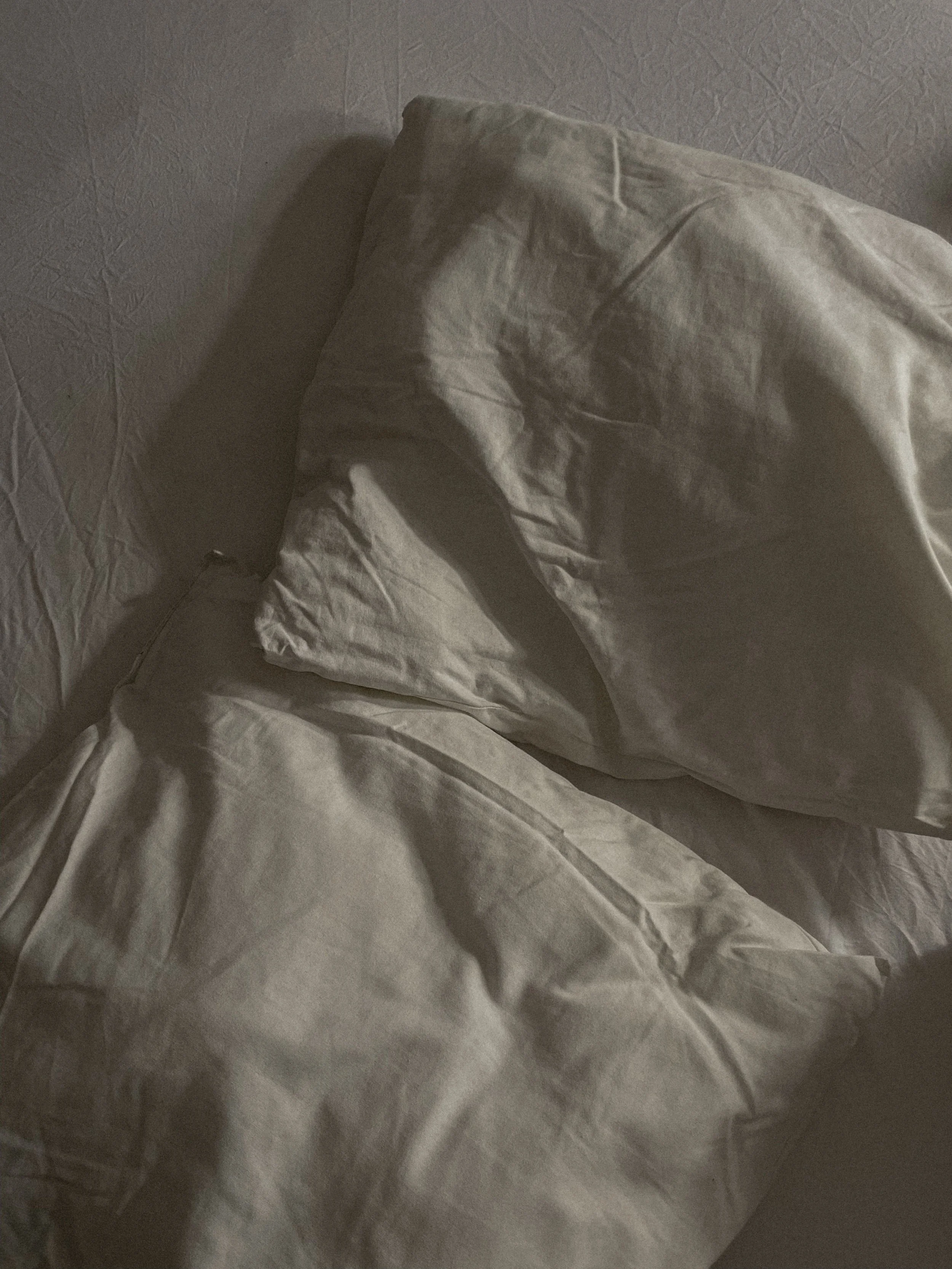
Have you tried everything?
By Katerina Tsernou | Hypnosomatics
Most people who struggle with sleep have tried everything. The supplements, the medication, the sleep hygiene checklists, the white noise machines, the chamomile tea. And while some of these things help, they rarely solve the problem because they address the symptom, not the source.
What if insomnia is not a sleep disorder?
What if it is simply the nervous system doing its job? Just the wrong job, at the wrong time. And beneath that, almost always, is a subconscious pattern keeping the alarm switched on long after it needs to be. No amount of magnesium or screen-time reduction will update a program running at the subconscious level.
Why the day you had shows up at 3am?
What we carry through the day strongly influences how the brain behaves at night. If stress, emotions, or worries remain unprocessed, the moment the body finally becomes still is often when the mind tries to process everything at once. Sleep requires something very specific from the nervous system: letting go. If the mind associates the bed with worry, pressure, or vigilance, it will resist that every night.
How the work goes
Through hypnosis and guided imagery, we begin changing those associations, so bedtime registers as safety rather than effort. Most people see change within the first two or three sessions, and the work is usually a series of around eight. Sessions are online worldwide, and in person in New York and Miami by request.
Common questions:
Does hypnosis help with sleep?
In a controlled study of 70 healthy women, a hypnotic suggestion to sleep more deeply was followed by 81% more slow-wave sleep. A review of 24 studies found a benefit in 58% of them, in small samples of mixed quality.
How many sessions will I need?
Most people see change within the first two or three sessions, often in how quickly they fall asleep. The work is usually a series of around eight, because the day matters as much as the night. I meet you where you are and work at the pace that fits you.
Can I do this while taking sleep medication?
Yes. This work sits alongside medical care, never instead of it. Any change to prescribed medication is a decision for you and your physician only. Many people begin while still taking something, and simply notice that nights get quieter as the underlying pattern updates.
Your body has not forgotten how to sleep. Sometimes it just needs permission. We work with the pattern rather than arguing with it, and we work on the day as well as the night, because the two are connected. Nothing is taken from you and nothing is forced. If you are tired of lying awake, tell me what your nights look like.
If you'd like something to start with tonight, this is the recording I give clients between sessions.
— Katerina
Cordi, Schlarb & Rasch (2014), Sleep — https://pubmed.ncbi.nlm.nih.gov/24882909/ Chamine, Atchley & Oken (2018), Journal of Clinical Sleep Medicine — https://pubmed.ncbi.nlm.nih.gov/29198290/